In this literature circle we began to unravel the last of the story. At the end of the book, all the loose ends came together and everything began to make sense. There was a significant analogy in this chapter: lock, stock and barrel. These represent the three girls, Leah is the barrel, Rachel the lock and Adah the quiet stock.All these parts when separate are useless and when put together are complete and make a whole. The assemblence of the parts creates a whole, however it is a violent and destructive whole,a gun. This could be seen as, once the girls are all together, they create something deadly and together they kill their Ruth May. Another analogy for the Price family arose in the last section of the book: the tree, the stump and the seedlings. The tree stands for Orleanna who hold everything together and is Ruth May's safe haven from the rest of the world. The stump is Nathan, rotting away into nothing and the seedlings are of course the girls, springing up from underneath the safe tree, growing taller as the stump rots further into the ground.
The Okapi appears once again in this chapter. Our class decided that it represented the spirit of the Congo who lived for one more year and then died, it was subjected to the same cycle of life as the spider and anything else; when one creature dies, another one lives. So, perhaps by the death of the Okapi it will allow another animal, another country to live for just one more year. This is an interesting topic, the Okapi was affected by one of the smallest of insects and was allowed to live an entire extra year and bread children. The idea that everything on earth is tied together and that every second we live we are affecting others tied into a speech we heard in chapel. Weather it be a child or an insect we are affecting everything around us.
Each girl including Orleanna found their own personal religion away from Christianity. Adah found science and the study of disease. She still believes in balance and uses her palindromes in her work. Rachel has not changed, she believes only in herself and her material goods. Leah is perhaps the most like her father, she is constantly over-compensating for a guilty past. Leah believes with all her heart in Anatole and Africa, she is a humanitarian and believes in suffering. Orleanna still has some christian blood in her, but mainly she turns to her garden for comfort. She started new with new seeds and can see beautiful things grow from her hands. This is how the four living Price's deal with their history and their very present pain.
The title of the last chapter is "the eyes in the trees". These eyes are Ruth May because she is the green mamba snake up in the branches looking down on everyone. She watches everything and yet no one can see her. Nathan, Orleanna and the three sisters all feel the eyes on them, creating guilt and furthering Nathan's need to save.
Ruth May was in the end set free with death, like Methuselah. Ruth May talks about how death is like living. There is a palindrome here that Adah had earlier pointed out. The palindrome of life and death. So, when Ruth May tells her mother to walk into the light, it is a double meaning. Light comes both from life as well as death, from birth and death alike. Lightness is also forgiveness. Ruth May, Methuselah, Nathan were all set free at death, they walked into the light and were given forgiveness.
Tuesday, April 24, 2007
Wednesday, April 18, 2007
Lit Circle #5: Song of The Three Children/The Eyes In The Trees: Moderator
1. In the last section of the book, The Eyes In The Trees, Ruth May was missing her usual childish voice. Why do you think this is?
2. Based on the three sisters personalities can you identify them in their last reunion?
3. In The Song of The Three Children Orleanna does not have her usual starting section, what is the significance and why was Rachel the one to go first?
4. Rachel talked about her regrets for not moving back to America, what stopped her what do you think would be different about her and her life had she gone?
5. Rachel has referred back to her book of How to Survive 101 Calamities and how it has saved her, what do you think the significance of this book is and why is it so important to her?
6. In Leah’s section she talks about Anatole’s stories, she told one in particular about a couple trying to cross a river. What is the meaning of this story and who might the couple, represent?
7. Adah talks about being left under a tree in the forest as an infant. This was the original tradition in Kilanga if one were to give birth to twins. So why does Adah say that she was left under a tree, what is she trying to say?
8. Adah often refers to how her mother stares at the sea as if, glaring across the ocean at Africa. Why does Adah say this and why would her mother be glaring?
9. What could the okapi represent? It has come up a few times in correlation with Orleanna.
10. Why does no one know what happened to Kilanga? Has it disappeared? And if so how, where is every one they used to know and who was the familiar woman who spoke their local tongue?
11. Why could they not find Ruth May’s grave? And why was it so important to find?
2. Based on the three sisters personalities can you identify them in their last reunion?
3. In The Song of The Three Children Orleanna does not have her usual starting section, what is the significance and why was Rachel the one to go first?
4. Rachel talked about her regrets for not moving back to America, what stopped her what do you think would be different about her and her life had she gone?
5. Rachel has referred back to her book of How to Survive 101 Calamities and how it has saved her, what do you think the significance of this book is and why is it so important to her?
6. In Leah’s section she talks about Anatole’s stories, she told one in particular about a couple trying to cross a river. What is the meaning of this story and who might the couple, represent?
7. Adah talks about being left under a tree in the forest as an infant. This was the original tradition in Kilanga if one were to give birth to twins. So why does Adah say that she was left under a tree, what is she trying to say?
8. Adah often refers to how her mother stares at the sea as if, glaring across the ocean at Africa. Why does Adah say this and why would her mother be glaring?
9. What could the okapi represent? It has come up a few times in correlation with Orleanna.
10. Why does no one know what happened to Kilanga? Has it disappeared? And if so how, where is every one they used to know and who was the familiar woman who spoke their local tongue?
11. Why could they not find Ruth May’s grave? And why was it so important to find?
Lit Circle #4 Response
We had another literature in class, this time on the chapter of Exodus. One of the major points we covered was that of guilt. In this section each girl deals with their own personal guilt and how the deal with it and seek redemption. Each girl including Orleanna has found their own religion, which helps them deal with their withstanding guilt. Orleanna has found gardening and cherishes the flowers and beautiful living things the she grows and nurtures. Each new seed to her is like a second chance, at life and as a mother. Rachel deals with her guilt by believing and trusting only herself and her material goods. She has changed very little, the least out of the entire family. Rachel pours herself into her appearance and her hotel. She stays oblivious and blocks out anything that brings her back to her childhood; this only leaves her stuck and in denial. Leah marries her first love, Anatole. She has made her religion service. She has become exactly like her father in how she feels a need to save others and does it be suffering. She has a constant need to save others, from poverty, hunger but mainly from the government. Leah overcompensates for Ruth May’s death and does this by her political actions. Adah, the last living daughter has made science her religion. Adah makes disease her redemption. She studies disease that is prominent in Africa. Her bible is the same, she believes in muntu and the cycle of life. When one good thing happens, something else bad will come up to keep its balance. Adah in going to school and becoming a doctor inevitably met many people, one of who helped her to get rid of her limp. She is no longer crooked and has lost her old way of seeing things. She misses her old self and like Jekyll and Hide, pretends, at night, that her limp is back, but her old way never lasts past the night.
Nathan also had a very small, but interesting part in this section. We learn that he has died. Nathan was apparently chased up a wooden tower and burnt to the ground. This was very close to the death of Jesus Christ. The parallel between their two crucifixions was curious. Nathan perhaps just took the bible a little too serious. There was also a quote from the bible that Adah described as being related to Nathan’s death. It was the last excerpt from the testament. It ended with the phrase: “and this shall be the end”.
We noticed a second parallel in this chapter. It was between Ruth May and Lummumba. The both died on the very same day, January 17th. They were both innocent figures representing less innocent wholes, the Price family and the Congo. Both the Price family and the Congo were victims of other forces, the Congo of foreign nations and The Price family of Nathan. Each ended with a tragic death, Lummumba and Ruth May. After the death of Ruth May the price family split, ending their independence from Nathan and the Congo. By the death of Lummumba, the Congo also had an end of independence and a split as well. As of now in the story the price family is split and shattered as well as the Congo, in both literal and metaphoric terms. The Prices family is no longer close in heart; they are also separated by a great ocean. The Congo is fallen apart being lead into poverty and chaos by Mbutu. It is also about to split literally into two different countries. The Democratic Republic of the Congo and The Republic of the Congo.
Another large point that we discussed was that of the emotional change in Adah that was expressed in this chapter. Adah throughout the chapter is tormented with a question to which she cannot alone answer. She yearns to know the reason that her mother chose to take her out of Africa instead of Leah or Rachel. Orleanna had to make a choice, and she chose Adah. Adah made one very important phone call to her mother on Christmas Eve, asking why. Why did Orleanna choose Adah? Simple. Adah was relieved to discover that the reason she was chosen was because of her rank as the second youngest child. A mother loves from the bottom up, and Adah just happened to be next in line. This call showed another side to Adah that we had not seen before. Adah needed love, she asked for it for the first time. Adah finally expressed her well-stifled requirement of love.
Back in Kilanga we have news that Tata Ndu has died of heart complications and so his eldest son took over the job. This son was a rather controversial chief and so was driven out of the village leaving the second oldest son in charge.
Leah talked about how we are all co-conspirators, referring not only to her family but also directly to us, and the reader on page 474. She asks us what we do now. She has told her story of poverty and suffering. We know how we can help and where to go, but what are we going to do? This is exactly what Kravinsky and Singer asked us. They have given us all this information and what? What are we going to do?
Nathan also had a very small, but interesting part in this section. We learn that he has died. Nathan was apparently chased up a wooden tower and burnt to the ground. This was very close to the death of Jesus Christ. The parallel between their two crucifixions was curious. Nathan perhaps just took the bible a little too serious. There was also a quote from the bible that Adah described as being related to Nathan’s death. It was the last excerpt from the testament. It ended with the phrase: “and this shall be the end”.
We noticed a second parallel in this chapter. It was between Ruth May and Lummumba. The both died on the very same day, January 17th. They were both innocent figures representing less innocent wholes, the Price family and the Congo. Both the Price family and the Congo were victims of other forces, the Congo of foreign nations and The Price family of Nathan. Each ended with a tragic death, Lummumba and Ruth May. After the death of Ruth May the price family split, ending their independence from Nathan and the Congo. By the death of Lummumba, the Congo also had an end of independence and a split as well. As of now in the story the price family is split and shattered as well as the Congo, in both literal and metaphoric terms. The Prices family is no longer close in heart; they are also separated by a great ocean. The Congo is fallen apart being lead into poverty and chaos by Mbutu. It is also about to split literally into two different countries. The Democratic Republic of the Congo and The Republic of the Congo.
Another large point that we discussed was that of the emotional change in Adah that was expressed in this chapter. Adah throughout the chapter is tormented with a question to which she cannot alone answer. She yearns to know the reason that her mother chose to take her out of Africa instead of Leah or Rachel. Orleanna had to make a choice, and she chose Adah. Adah made one very important phone call to her mother on Christmas Eve, asking why. Why did Orleanna choose Adah? Simple. Adah was relieved to discover that the reason she was chosen was because of her rank as the second youngest child. A mother loves from the bottom up, and Adah just happened to be next in line. This call showed another side to Adah that we had not seen before. Adah needed love, she asked for it for the first time. Adah finally expressed her well-stifled requirement of love.
Back in Kilanga we have news that Tata Ndu has died of heart complications and so his eldest son took over the job. This son was a rather controversial chief and so was driven out of the village leaving the second oldest son in charge.
Leah talked about how we are all co-conspirators, referring not only to her family but also directly to us, and the reader on page 474. She asks us what we do now. She has told her story of poverty and suffering. We know how we can help and where to go, but what are we going to do? This is exactly what Kravinsky and Singer asked us. They have given us all this information and what? What are we going to do?
Tuesday, April 10, 2007
Lit Circle #4: Exodus: Physiological Critic
Adah:
Through this chapter Adah struggles with self-acceptance as well as self-discovery. Characteristics that were once a burden to her now seem self-defining and precious. Adah did not realize what her differences were worth until they were gone. Her limp was once considered a handicap and liability but, now that she has lost her benduka, she longs to feel the old slanted Ada; which she has lost. “I find I no longer have Ada, the mystery of coming and going. Along with my split body drag I lost my ability to read in the old way.” (Adah: 492). Adah has a hard time accepting her new self, “Oddly enough, it has taken me years to accept my new position.” (Adah: 492). She misses what she used to see, her slant, and the person she no longer is. “When I open a book, the words sort themselves into narrow-minded single file on the page; the mirror-image poems erase themselves half-formed in my mind. I miss those mirror poems.” (Adah: 492). Sometimes when you wake up you realize you are a different person, every day you change and form into a whole new being. Adah feels nostalgic and has a sort of ache for the past. She sometimes tries to recreate what she use to have, “Sometimes at night, in secret, I still limp purposefully around my apartment, like Mr. Hyde, trying to recover my old ways of seeing and thinking. Like Jekyll I crave that particular darkness curled up within me. Sometimes it almost comes. The books on the shelf rise up in solid shapes snap forward to meet my eyes. But it never lasts. By morning light, the books are all hunched together again with their spines turned out, fossilized, inanimate.”
Adah also searches for personal answers in this chapter, the main one being why her mother chose her to take out of Africa. Adah felt sure of everything she knew, she was steady in where she belonged in the world, her worth, her rank. “Oh, I knew it all, backward and forward. I learned the balance of power in one long Congolese night, when the driver ants came: the bang on the door, the dark hustle and burning feet, and last of all Adah dragging the permanent singsong of her body left . . . behind. Out into the moonlight where the ground boiled and there stood Mother like a tree rooted motionless in the middle of a storm. Mother staring at me, holding Ruth May in her arms, weighing the two of us against one another. The sweet intact child with golden ringlets and perfectly paired strong legs, or the dark mute adolescent dragging a stubborn, disjunct half-body. Which? After hesitating only a second, she chose to save perfection and leave the damaged. Everyone must choose.”(Adah: 412). This defined how Adah thought of herself, she was not the worthy child, she was not the chosen one and so that is how she founded her worth. But, in this chapter Adah found herself to be worth more than she had ever thought, and so all that she ever thought was now put into question. Her life was complicated, she was not first, but neither was she last, “There was room in Adah for nought but pure love and pure hate. Such a life is satisfying and deeply uncomplicated. Since then, my life has become much more difficult. Because later on, she chose me. In the end she could only carry one child alive out of Africa and I was that child. Would she rather have had Ruth May? Was I the booby prize? Does she look at me and despise her loss? Am I alive only because Ruth May is dead? What truth can I possibly discharge?”(Adah: 413) This is the state we left Adah at the end of the chapter, a time of questioning and self-discovery both because of her new way of seeing the world as well as her new place in her mother’s life.
Orleanna:
Orleanna began the chapter by describing her grief and how she dealt with it. “AS LONG AS I KEPT MOVING, my grief streamed out behind me like a swimmer’s long hair in water. I knew the weight was there but it didn’t touch me. Only when I stopped did the slick, dark stuff of it comes floating around my face, catching my arms and throat till I began to drown. So I just didn’t stop.”(Orleanna: 381) And so, to deal with her unrelenting pain that followed her, she never did stop moving until she brought her baby, Adah back to the U.S. safe and alive. Orleanna had a special attachment to Ruth May, it was her last born and unlike the others, she wanted baby Ruth May to stay with her forever, she cradled her and fed her, cherishing every moment. This was the last first step she would see from her own child and so it counted three fold. Ruth May was the lucky last one, and so by order she was the favorite, but once Ruth May died, Adah was next in line.
Orleanna left Nathan without a word; she never turned around but moved forward, right through anything that might cross her path. She knew deep inside herself that she should have left him long ago and so she feels guilt about it, but also anger. “Nathan was something that happened to us, as devastating in its way as the burning roof that fell on the family Mwanza; with our fate scarred by hell and brimstone we still had to track our course. And it happened finally by the grace of hell and brimstone that I had to keep moving. I moved, and he stood still.” (Orleanna: 384).
After Orleanna had settled back down to life in America, she began to become her own again. Nathan and the Congo forever scarred her, but she was becoming a person apart from him. “The odd thing is when Father was around she never gardened at all. That was his domain, and he directed us all in the planting of useful foods, all to the Glory of God and so forth. We never had one flower in our yard the whole of my childhood. Not so much as a dandelion. Now Mother’s shack is the mere peak of a roof surrounded by a blaze of pinks, blues, oranges. You have to bend under a wild arch of cosmos when you come up the walk, and use your whole right arm to push the hollyhocks aside to get in the front door. It turns out Mother has an extraordinary talent for flowers. She was an entire botanical garden waiting to happen.” (Orleanna: 410). And that’s just it, Orleanna was waiting to happen, perhaps now, she cannot be what she could of, or would have been without Nathan, but she is still becoming someone new and independent. “Like Methuselah I cowered beside my cage, and though my soul hankered after the mountain, I found, like Methuselah, I had no wings. This is why, little beast. I’d lost my wings. Don’t ask me how I gained them back—the story is too unbearable.” Orleanna is slowly through an unbearable journey, gaining back her wings. “When I visit her out in her walled garden with her hands sunk into the mulch, kneading the roots of her camellias. If she isn’t home, I walk down to the end of the historic cobbled street and find her standing on the sea wall in her raincoat and no shoes, glaring at the ocean. Orleanna and Africa at a standoff. The kids flying by on bicycles steer clear of this barefoot old woman in her plastic babushka, but I can tell you she is not deranged. My mother’s sanest position is to wear only the necessary parts of the outfit and leave off the rest. Shoes would interfere with her conversation, for she constantly addresses the ground under her feet. Asking forgiveness. Owning, disowning, recanting, recharting a hateful course of events to make sense of the story. All human odes are essentially one. “My life: what I stole from history, and how I live with it.”” Orleanna has returned to her unmanaged, shoeless self. No one is controlling her except herself and her ever-haunting guilt.
Through this chapter Adah struggles with self-acceptance as well as self-discovery. Characteristics that were once a burden to her now seem self-defining and precious. Adah did not realize what her differences were worth until they were gone. Her limp was once considered a handicap and liability but, now that she has lost her benduka, she longs to feel the old slanted Ada; which she has lost. “I find I no longer have Ada, the mystery of coming and going. Along with my split body drag I lost my ability to read in the old way.” (Adah: 492). Adah has a hard time accepting her new self, “Oddly enough, it has taken me years to accept my new position.” (Adah: 492). She misses what she used to see, her slant, and the person she no longer is. “When I open a book, the words sort themselves into narrow-minded single file on the page; the mirror-image poems erase themselves half-formed in my mind. I miss those mirror poems.” (Adah: 492). Sometimes when you wake up you realize you are a different person, every day you change and form into a whole new being. Adah feels nostalgic and has a sort of ache for the past. She sometimes tries to recreate what she use to have, “Sometimes at night, in secret, I still limp purposefully around my apartment, like Mr. Hyde, trying to recover my old ways of seeing and thinking. Like Jekyll I crave that particular darkness curled up within me. Sometimes it almost comes. The books on the shelf rise up in solid shapes snap forward to meet my eyes. But it never lasts. By morning light, the books are all hunched together again with their spines turned out, fossilized, inanimate.”
Adah also searches for personal answers in this chapter, the main one being why her mother chose her to take out of Africa. Adah felt sure of everything she knew, she was steady in where she belonged in the world, her worth, her rank. “Oh, I knew it all, backward and forward. I learned the balance of power in one long Congolese night, when the driver ants came: the bang on the door, the dark hustle and burning feet, and last of all Adah dragging the permanent singsong of her body left . . . behind. Out into the moonlight where the ground boiled and there stood Mother like a tree rooted motionless in the middle of a storm. Mother staring at me, holding Ruth May in her arms, weighing the two of us against one another. The sweet intact child with golden ringlets and perfectly paired strong legs, or the dark mute adolescent dragging a stubborn, disjunct half-body. Which? After hesitating only a second, she chose to save perfection and leave the damaged. Everyone must choose.”(Adah: 412). This defined how Adah thought of herself, she was not the worthy child, she was not the chosen one and so that is how she founded her worth. But, in this chapter Adah found herself to be worth more than she had ever thought, and so all that she ever thought was now put into question. Her life was complicated, she was not first, but neither was she last, “There was room in Adah for nought but pure love and pure hate. Such a life is satisfying and deeply uncomplicated. Since then, my life has become much more difficult. Because later on, she chose me. In the end she could only carry one child alive out of Africa and I was that child. Would she rather have had Ruth May? Was I the booby prize? Does she look at me and despise her loss? Am I alive only because Ruth May is dead? What truth can I possibly discharge?”(Adah: 413) This is the state we left Adah at the end of the chapter, a time of questioning and self-discovery both because of her new way of seeing the world as well as her new place in her mother’s life.
Orleanna:
Orleanna began the chapter by describing her grief and how she dealt with it. “AS LONG AS I KEPT MOVING, my grief streamed out behind me like a swimmer’s long hair in water. I knew the weight was there but it didn’t touch me. Only when I stopped did the slick, dark stuff of it comes floating around my face, catching my arms and throat till I began to drown. So I just didn’t stop.”(Orleanna: 381) And so, to deal with her unrelenting pain that followed her, she never did stop moving until she brought her baby, Adah back to the U.S. safe and alive. Orleanna had a special attachment to Ruth May, it was her last born and unlike the others, she wanted baby Ruth May to stay with her forever, she cradled her and fed her, cherishing every moment. This was the last first step she would see from her own child and so it counted three fold. Ruth May was the lucky last one, and so by order she was the favorite, but once Ruth May died, Adah was next in line.
Orleanna left Nathan without a word; she never turned around but moved forward, right through anything that might cross her path. She knew deep inside herself that she should have left him long ago and so she feels guilt about it, but also anger. “Nathan was something that happened to us, as devastating in its way as the burning roof that fell on the family Mwanza; with our fate scarred by hell and brimstone we still had to track our course. And it happened finally by the grace of hell and brimstone that I had to keep moving. I moved, and he stood still.” (Orleanna: 384).
After Orleanna had settled back down to life in America, she began to become her own again. Nathan and the Congo forever scarred her, but she was becoming a person apart from him. “The odd thing is when Father was around she never gardened at all. That was his domain, and he directed us all in the planting of useful foods, all to the Glory of God and so forth. We never had one flower in our yard the whole of my childhood. Not so much as a dandelion. Now Mother’s shack is the mere peak of a roof surrounded by a blaze of pinks, blues, oranges. You have to bend under a wild arch of cosmos when you come up the walk, and use your whole right arm to push the hollyhocks aside to get in the front door. It turns out Mother has an extraordinary talent for flowers. She was an entire botanical garden waiting to happen.” (Orleanna: 410). And that’s just it, Orleanna was waiting to happen, perhaps now, she cannot be what she could of, or would have been without Nathan, but she is still becoming someone new and independent. “Like Methuselah I cowered beside my cage, and though my soul hankered after the mountain, I found, like Methuselah, I had no wings. This is why, little beast. I’d lost my wings. Don’t ask me how I gained them back—the story is too unbearable.” Orleanna is slowly through an unbearable journey, gaining back her wings. “When I visit her out in her walled garden with her hands sunk into the mulch, kneading the roots of her camellias. If she isn’t home, I walk down to the end of the historic cobbled street and find her standing on the sea wall in her raincoat and no shoes, glaring at the ocean. Orleanna and Africa at a standoff. The kids flying by on bicycles steer clear of this barefoot old woman in her plastic babushka, but I can tell you she is not deranged. My mother’s sanest position is to wear only the necessary parts of the outfit and leave off the rest. Shoes would interfere with her conversation, for she constantly addresses the ground under her feet. Asking forgiveness. Owning, disowning, recanting, recharting a hateful course of events to make sense of the story. All human odes are essentially one. “My life: what I stole from history, and how I live with it.”” Orleanna has returned to her unmanaged, shoeless self. No one is controlling her except herself and her ever-haunting guilt.
Thursday, April 5, 2007
Free Choice: 4
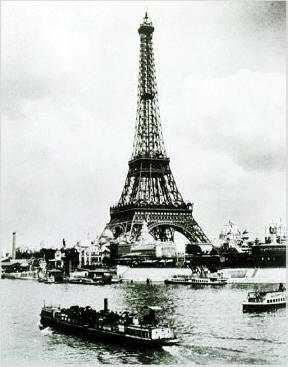
Last summer I went to France, we only stayed in Paris for a few nights, but while we were there we, of course, saw the Eiffel tower. It seemed like one of the most important things to do while we were there. There is always so much hype around it, and I can't say it ever let me down. The structure was huge and so complicated. Eiffel, the man who built the Eiffel tower also constructed the Statue of liberty. I have been to the top of both of these iconic towers, and it would have been a hard task to over imagine either. The Eiffel tower was supposedly first built for a party and opened to bad reviews from the french. Now it is certainly seen with different eyes. There must have been over a thousand metal beams supporting and building up the tall structure. Once you had climbed the seemingly millions of stairs up to the top you could see the entire city, the Notre Dame, Arc de Triumph and small cobble stone streets of Paris were within a half an hours reach, and the tip of the swaying Eiffel tower was touching your feet. I felt like I was on top of the world, I was really just on the top of Paris France, but that is not much compromise. With the seine river flowing close by I took a deep breath of the clear summer air and began the long descent. While the rest of my trip was amazing and though I had a chance to see world famous painting and cathedrals, nothing can top the Eiffel tower.
Free Choice: 3
I am currently enrolled in a class called service leadership, where we learn about different types of service and how to do our own research and make our own projects. I am glad that I'm taking it because I feel that it will help me find more opportunities to give back. Recently, we have been concentrating particularly on the environmental aspect of both our local and our global communities. The more I learn, the more I feel obligated to do something about what is happening in our world and on our island. My sophomore class has been learning about helping others and how such little things as a dollar a week can make as big a difference as someones life. Not only am I learning about this in service leadership, but in science and English as well. In fact our two essential questions for this whole English semester are who am I in this world and what type of world is this. We also just had a big project in science about how we can find alternate sources for our energy that would both save money and our environment. There are so many little things we can do to improve our environment every day that would have very little affect on our daily lives such as eating locally grown food, walking to school or simply traveling less.
In the beginning of English, this semester we read two very interesting articles on helping others in general. There are so many things we can do that would be so easy and yet we never seem to get around to doing them. The two articles were, The Singer Solution to World Poverty and The Gift, a biography about Zell Kravinsky. They both had very strong and controversial ideas generally telling us that if we bought a ten dollar t-shirt instead of donating that money to a third world country, where a child's life could be saved with it, then we were directly killing that child, cold blooded murder. While I do not completely agree with this idea, I do feel more obligation to be frugal and the article haunts me every time I pass my I.D. card over the snack bar counter. Even if our hands are not bloody, perhaps we are closer to that daunting name of murder than we think. Every time I take a bite of food or drink a sip of water am I starving an infant across the world? Every time I get dressed in the morning is someone in Africa dying of heat stroke? Every time I step under my roof to sleep is a child in South America left out at night? How direct are my actions to the rest of the world and every time I take, is someone else loosing?
In the beginning of English, this semester we read two very interesting articles on helping others in general. There are so many things we can do that would be so easy and yet we never seem to get around to doing them. The two articles were, The Singer Solution to World Poverty and The Gift, a biography about Zell Kravinsky. They both had very strong and controversial ideas generally telling us that if we bought a ten dollar t-shirt instead of donating that money to a third world country, where a child's life could be saved with it, then we were directly killing that child, cold blooded murder. While I do not completely agree with this idea, I do feel more obligation to be frugal and the article haunts me every time I pass my I.D. card over the snack bar counter. Even if our hands are not bloody, perhaps we are closer to that daunting name of murder than we think. Every time I take a bite of food or drink a sip of water am I starving an infant across the world? Every time I get dressed in the morning is someone in Africa dying of heat stroke? Every time I step under my roof to sleep is a child in South America left out at night? How direct are my actions to the rest of the world and every time I take, is someone else loosing?
Lit circle #3 Response
We just finished discussing the Bel and the Serpent section of the Poisonwood Bible last class and this is a reflection on that discussion as well as a brief summary of what our class and Mrs. Watson found to be most significant in the chapter.
Orleanna opens the chapter differently than usual; she talks politics. She confides her deep guilt and remorse for being so oblivious to the world beyond her doors. While reminiscing she seems to be appalled at how ignorant she was, the escape, capture and eventual death of Lumumba flew so easily by her while her eyes were averted to Ruth May's rising fever and Rachel's 17th birthday.
After Orleanna's chapter, but still toward the beginning of the chapter we begin to see mounting tensions and family disputes. One of the most significant and important parts of this previous chapter was the death of Ruth May. As each different character recorded their memories of what happened they seemed to each deal differently with the situation. The mixing of religion and politics could be preserved as the bite from the fly. After casting a lop-sided vote of weather to except Jesus into their culture Leah begins to turn away from her father's solid failure. Leah begins to rebel and brings both good and bad attention to their family, but as much as it may seem Rachel wants it, attention is the last thing she needs from anyone besides her family. She wants so badly to fit in that she begins to resent Leah for bringing in unwanted attention. Rachel begins to feel like all she needs to do is get away from the Congo, back to where she is considered "main stream" and can blend in. As Rachel grows more and more desperate so does their African situation.
Ruth May dies by death of snakebite, a pivotal point both in the story and in the contained characters. All three daughters who witnessed the death of their younger sister seemed to react very differently on the surface but beneath it all, I believe they had very similar reactions; they just described the emotions in different ways. All three girls were drawn in and silent. They were stuck in that moment. It brought them all crashing down to reality. I felt like their Bantus at that moment finally became what we would consider Muntu. Rachel observed that they could not or would not move. They thought that they could freeze time and that moment so that their family could stay just as it had been, in one piece. Leah clearly described a moment of immobility and Adah recorded a refusal from all of them to move or follow Ruth May. Adah also made an observation of how much Ruth May’s death was like her birth, Leah described the last breath of Ruth May similar to that of a baby’s first breath, exactly the way Adah found it to be. They both made identical remarks on the resemblance of the puncture wounds into Ruth May’s arm are of a punctuation mark at the end of a sentence. Rachel worried about he3r mother’s reaction to Ruth May’s death, though she had (as it seems in the present), nothing to worry about.
Orleanna was calm, cool, and collected at the news of Ruth May’s decease. Mrs. Watson shrewdly observed that perhaps Orleanna was so over come with emotion that she simply could not feel or express it. Orleanna went right to business creating a shroud for the corps. Nathan’s reaction was minimal, besides a few comments about Ruth May not being baptized he seemed to have little concern or problem with the news, but I expected nothing more.
Another significant part of this chapter was the whole deal with the title of the chapter and what it represented. Bel and the Serpent was a religious story that told of a false idol, Bel and the serpent. Through much discussion we agreed that Bel could represent either Nathan or tata Kvundu. Both of which preached texts or messages (curses and such) to which I find rather questionable. Nathan seems to believe hard what he preaches, but in his desperation to gather popularity among the locals he would not stop for a moment to not tell a lie if it could get him ahead. Tata Kvundu preaches false curses and predictions that villagers put much weight on. The people of Kilago are like the serpent because they believe so hard in tata Kvundu that they will eventually be bitten, even if they turn away and towards Nathan. An honest leader is a rare treasure in this time in the Congo.
Orleanna opens the chapter differently than usual; she talks politics. She confides her deep guilt and remorse for being so oblivious to the world beyond her doors. While reminiscing she seems to be appalled at how ignorant she was, the escape, capture and eventual death of Lumumba flew so easily by her while her eyes were averted to Ruth May's rising fever and Rachel's 17th birthday.
After Orleanna's chapter, but still toward the beginning of the chapter we begin to see mounting tensions and family disputes. One of the most significant and important parts of this previous chapter was the death of Ruth May. As each different character recorded their memories of what happened they seemed to each deal differently with the situation. The mixing of religion and politics could be preserved as the bite from the fly. After casting a lop-sided vote of weather to except Jesus into their culture Leah begins to turn away from her father's solid failure. Leah begins to rebel and brings both good and bad attention to their family, but as much as it may seem Rachel wants it, attention is the last thing she needs from anyone besides her family. She wants so badly to fit in that she begins to resent Leah for bringing in unwanted attention. Rachel begins to feel like all she needs to do is get away from the Congo, back to where she is considered "main stream" and can blend in. As Rachel grows more and more desperate so does their African situation.
Ruth May dies by death of snakebite, a pivotal point both in the story and in the contained characters. All three daughters who witnessed the death of their younger sister seemed to react very differently on the surface but beneath it all, I believe they had very similar reactions; they just described the emotions in different ways. All three girls were drawn in and silent. They were stuck in that moment. It brought them all crashing down to reality. I felt like their Bantus at that moment finally became what we would consider Muntu. Rachel observed that they could not or would not move. They thought that they could freeze time and that moment so that their family could stay just as it had been, in one piece. Leah clearly described a moment of immobility and Adah recorded a refusal from all of them to move or follow Ruth May. Adah also made an observation of how much Ruth May’s death was like her birth, Leah described the last breath of Ruth May similar to that of a baby’s first breath, exactly the way Adah found it to be. They both made identical remarks on the resemblance of the puncture wounds into Ruth May’s arm are of a punctuation mark at the end of a sentence. Rachel worried about he3r mother’s reaction to Ruth May’s death, though she had (as it seems in the present), nothing to worry about.
Orleanna was calm, cool, and collected at the news of Ruth May’s decease. Mrs. Watson shrewdly observed that perhaps Orleanna was so over come with emotion that she simply could not feel or express it. Orleanna went right to business creating a shroud for the corps. Nathan’s reaction was minimal, besides a few comments about Ruth May not being baptized he seemed to have little concern or problem with the news, but I expected nothing more.
Another significant part of this chapter was the whole deal with the title of the chapter and what it represented. Bel and the Serpent was a religious story that told of a false idol, Bel and the serpent. Through much discussion we agreed that Bel could represent either Nathan or tata Kvundu. Both of which preached texts or messages (curses and such) to which I find rather questionable. Nathan seems to believe hard what he preaches, but in his desperation to gather popularity among the locals he would not stop for a moment to not tell a lie if it could get him ahead. Tata Kvundu preaches false curses and predictions that villagers put much weight on. The people of Kilago are like the serpent because they believe so hard in tata Kvundu that they will eventually be bitten, even if they turn away and towards Nathan. An honest leader is a rare treasure in this time in the Congo.
Wednesday, March 28, 2007
Poison Wood Bible vs. Mosquito Coast
The two stories of the Poisonwood Bible and The Mosquito Coast are very similar and yet I noticed many differences between the two stories. Both stories were centered around a controlling and over-bearing father who dragged there families to Africa for their own personal benefits and accomplishments that would be supposedly beneficial to their families and Africa and yet some how in both stories you come to the realization that the "benefits" is more of a cover than anything else. Both fathers come to Africa with high hopes soon to be crushed but they keep their heads up and never lose faith in belief of being better than the native people of the country. The father's strong opinions are originally backed by their children who begin to turn on the father's towards the end of the story. The change in heart of the children starts to break the families apart. The stories are both centered on a father's obsession with himself and his beliefs in things (bible and ice machine). The bible and the ice machine both start out innocent enough as a way to benefit the native African people but end up in self-destruction.
Though these stories have many parallels and similarities, they are full of differences as well. In The Mosquito Coast the father seems to have more confidence in and love for his family although this does begin to change along the way, however he never reaches the extent of coldness as Nathan carries throughout. Nathan from the beginning had the idea of ruling the natives where as Allie set out with the mind to work for the natives rather than having them work for him. The opposite happens in both cases. Nathan is all for religion and is a missionary while Allie hates the idea of religion being spread to Africans. The most significant difference to me is that if someone outside his family doesn't want to follow Allie he gives them that option where as Nathan simply won't stand for any one not following him exactly.
Though these stories have many parallels and similarities, they are full of differences as well. In The Mosquito Coast the father seems to have more confidence in and love for his family although this does begin to change along the way, however he never reaches the extent of coldness as Nathan carries throughout. Nathan from the beginning had the idea of ruling the natives where as Allie set out with the mind to work for the natives rather than having them work for him. The opposite happens in both cases. Nathan is all for religion and is a missionary while Allie hates the idea of religion being spread to Africans. The most significant difference to me is that if someone outside his family doesn't want to follow Allie he gives them that option where as Nathan simply won't stand for any one not following him exactly.
Monday, March 26, 2007
Lit Circle #3: Bel and the Serpent: New Critic
1. “ On the same August day, this is all I knew: the pain in my house hold seemed plenty large enough to fill the whole world. Ruth May was slipping away into her fever. And it was Rachel’s seventeenth birthday. I was wrapping up green glass earrings in tissue paper, hoping to make some small peace with my eldest child, while I tried to sponge the fire out of my youngest. And President Eisenhower was right then sending his orders to take over the Congo. Imagine that. His household was the world, and he’s finished making up his mind about things. He’d given Lumumba a chance, he felt. The Congo had been independent for fifty-one days.” (Orleanna: 320)
This quote seemed very significant to me because of the way it paralleled Orleanna's life and household with Eisenhower household and the global community. I think that Orleanna feels guilty about how much such insignificant things as her daughters birthday affected her and how little global issues such as the present state of their current and past country's leaders or weather the country that they are living in will remain exploited and abused by the U.S. and Belgium or if it will finally gain it's freedom.
2.“The sting of a fly, the Congolese say, can launch the end of the world. How simply things begin.” (Orleanna: 317)
“You can’t just point to the one most terrible thing and wonder why it happened. This has been a whole terrible time, from the beginning of the drought that left so many without food, and then the night of the ants, to now, the worst tragedy of all. Each bad thing causes something worse. As Anatole says, if you look hard enough you can always see reasons, but you’ll go crazy if you think it’s all punishment for your sins. I see that plainly when I look at my parents. God doesn’t punish us. He just grants us a long enough life to punish ourselves.” (Leah: 327)
“Maybe I shouldn’t say so but it’s true: Leah is the cause of all our problems. It goes back to when she and Father commenced World War Three at our house. What a crazy mixed-up scene. Leah would rare up and talk back to Father straight to his face, and then, boy oh boy. The rest of us would duck and cover like you have to do whenever they drop the A-bomb. Leah always had the upper-most respect for Father, but after the hullabaloo in the church where they voted Father out, she just plumb stopped being polite.” (Rachel: 335)
These three quotes were very interesting to me because they showed three very different perspectives on how their problems started and most likely how Ruth May was allowed to die. Rachel staying true too herself blames it on her sister Leah. Where as Leah herself, says that you cannot just point out one individual event and give it a reason or try to find one. Orleanna interprets this as stemming from a more insignificant event that just domminoed it's way to live changing events.
3.“I only remember hearing a gulp and a sob and a scream all at once, the strangest cry, like a baby taking it’s first breath. We couldn’t tell where it came from, but strangely enough, we all looked up at the treetops. A nervous wind stirred the branches, but nothing more. Only silence fell down. It’s a very odd thing to recall, that we all looked up. Not one of us looked at Ruth May. I can’t say that Ruth May was even there with us, in that instant. Just for the moment it was as if she’d disappeared, and her voice was thrown into the trees. Then she returned to us, but all that was left of her was an awful silence. The voiceless empty skin of my baby sister sitting quietly on the ground, hugging herself.” (Leah: 363)
“BECAUSE I COULD NOT STOP FOR DEATH—He kindly stopped for me. I was not present at Ruth May’s birth but I have seen it now, because I saw each step of it played out in reverse at the end of her life. The closing parenthesis, at the end of the palindrome that that was Ruth May. Her final gulp of air as hungry as a baby’s first breath. That last howling scream, exactly like the first, and then at the end a fixed, steadfast moving backward out of this world. After the howl, wide-eyed silence without breath. Her bluish face creased with a pressure closing in, the near proximity of the other-than –life that crowds down around the edges of living. Her eyes closed up tightly, and her swollen lips clamped shut. Her spine curved, and her limbs drew in more and more tightly until she seemed impossibly small. While we watched without comprehension, she moved away to where none of us wanted to follow. Ruth May shrank back through the narrow passage between this brief fabric of light and all the rest of what there is for us: the long waiting. Now she will wait the rest of the time. It will be exactly as long as the time that passed before she was born.” (Adah: 365)
“She went out to the kitchen house, fired the stove, warmed a pan of water, them carried it back into the house and set it on the big dining table where Nelson had laid the body on a bedsheet. Mother bathed Ruth May with a washcloth as if she were a baby. I stood with my back to the wall, remembering too much of another time, as I watched her rub carefully under the chin and in the folds at the backs of the elbows and knees. In our house in Bethlehem I used to stand outside the bathroom door, where I could see the two of them in the mirror. Mother singing soft questions and kissing her answers into the tiny, outstretched palms. Adah and I were nine then, too old to be jealous of a baby, but still I wondered if she had ever loved me that much. With twins, she could only have loved each of us by half. And Adah was the one who required more of her.” (Leah: 369)
‘Throughout the time of loss and salvation, Bwanga had remained Ruth May’s most loyal playmate. Even that my father wouldn’t have known. I felt an unspeakable despair. He knew nothing about the children. Under his cupped hand Bwanga’s little bald head looked like an overripe avocado he was prepared to toss away. She stood wide-eyed and motionless. “In the name of the Father, the Son, and the Holy Ghost,” he repeated, and released her. “Mah-dah-may-I?” Bwanga asked. Several other children remembered this game and echoed: “Mah-dah-mey-I?” Their eyes left Father and came to rest on Ruth May inside the drenched cloud of netting on the table. They all picked up the refrain, asking again and again in a rising plea: Mother May I? And though they surely knew no permission would be granted, they kept up their soft, steady chant for a very long time in the pouring rain. Water clung to their eyelashes and streamed in runnels down their open faces. Their meager clothes, imposed on them by foreigners, clung to their thin chests and legs like a second skin finally ready to accept the shape of their bodies. The dust on our feet turned blood-colored and the sky grew very dark, while Father moved around the circle baptizing each child in turn, imploring the living progeny of Kilanga to walk forward into the light.” (Leah: 375)
These quotes all have to do with the death of Ruth May and how her family dealt with it. Leah described hearing a scream up from the branches of the trees and that they had all looked up at the sky, not one of them looked at Ruth May. This was interesting because in earlier chapters when Ruth May was very sick Nelson had given Ruth May a box in which to put her spirit into so that right before she died she could disappear to her special place of choice and she chose her place to be up in the trees as a green mamba and so she flew. Adah described her death in her backwards way, she said that she saw Ruth May's birth rather than death. And in this moment, Adah's character began to make a little more sense to me. She described the symmetry of how Ruth May would wait after death exactly as long as she had before birth. Orleanna had a calm attitude at the news, even though Ruth May had been Orleanna's favorite. Leah described how she doubted that Orleanna could never love her as much as Ruth May and that she wasn't Jealous. I think that maybe Orleanna loved Ruth May best because she felt that she had to. Orleanna mentioned early on a feeling of guilt about knowing inside her that she had to many children, before Ruth May was even in the picture. And from this guilt I believe Orleanna created a compromising love and care for Ruth May. Nathan remaining his own true self took advantage of his daughter’s death and exploited it to the best of his ability. Inspired by his lack of baptism of Ruth May he began baptizing each child he saw, in rainwater falling from the sky to the parched earth.
This quote seemed very significant to me because of the way it paralleled Orleanna's life and household with Eisenhower household and the global community. I think that Orleanna feels guilty about how much such insignificant things as her daughters birthday affected her and how little global issues such as the present state of their current and past country's leaders or weather the country that they are living in will remain exploited and abused by the U.S. and Belgium or if it will finally gain it's freedom.
2.“The sting of a fly, the Congolese say, can launch the end of the world. How simply things begin.” (Orleanna: 317)
“You can’t just point to the one most terrible thing and wonder why it happened. This has been a whole terrible time, from the beginning of the drought that left so many without food, and then the night of the ants, to now, the worst tragedy of all. Each bad thing causes something worse. As Anatole says, if you look hard enough you can always see reasons, but you’ll go crazy if you think it’s all punishment for your sins. I see that plainly when I look at my parents. God doesn’t punish us. He just grants us a long enough life to punish ourselves.” (Leah: 327)
“Maybe I shouldn’t say so but it’s true: Leah is the cause of all our problems. It goes back to when she and Father commenced World War Three at our house. What a crazy mixed-up scene. Leah would rare up and talk back to Father straight to his face, and then, boy oh boy. The rest of us would duck and cover like you have to do whenever they drop the A-bomb. Leah always had the upper-most respect for Father, but after the hullabaloo in the church where they voted Father out, she just plumb stopped being polite.” (Rachel: 335)
These three quotes were very interesting to me because they showed three very different perspectives on how their problems started and most likely how Ruth May was allowed to die. Rachel staying true too herself blames it on her sister Leah. Where as Leah herself, says that you cannot just point out one individual event and give it a reason or try to find one. Orleanna interprets this as stemming from a more insignificant event that just domminoed it's way to live changing events.
3.“I only remember hearing a gulp and a sob and a scream all at once, the strangest cry, like a baby taking it’s first breath. We couldn’t tell where it came from, but strangely enough, we all looked up at the treetops. A nervous wind stirred the branches, but nothing more. Only silence fell down. It’s a very odd thing to recall, that we all looked up. Not one of us looked at Ruth May. I can’t say that Ruth May was even there with us, in that instant. Just for the moment it was as if she’d disappeared, and her voice was thrown into the trees. Then she returned to us, but all that was left of her was an awful silence. The voiceless empty skin of my baby sister sitting quietly on the ground, hugging herself.” (Leah: 363)
“BECAUSE I COULD NOT STOP FOR DEATH—He kindly stopped for me. I was not present at Ruth May’s birth but I have seen it now, because I saw each step of it played out in reverse at the end of her life. The closing parenthesis, at the end of the palindrome that that was Ruth May. Her final gulp of air as hungry as a baby’s first breath. That last howling scream, exactly like the first, and then at the end a fixed, steadfast moving backward out of this world. After the howl, wide-eyed silence without breath. Her bluish face creased with a pressure closing in, the near proximity of the other-than –life that crowds down around the edges of living. Her eyes closed up tightly, and her swollen lips clamped shut. Her spine curved, and her limbs drew in more and more tightly until she seemed impossibly small. While we watched without comprehension, she moved away to where none of us wanted to follow. Ruth May shrank back through the narrow passage between this brief fabric of light and all the rest of what there is for us: the long waiting. Now she will wait the rest of the time. It will be exactly as long as the time that passed before she was born.” (Adah: 365)
“She went out to the kitchen house, fired the stove, warmed a pan of water, them carried it back into the house and set it on the big dining table where Nelson had laid the body on a bedsheet. Mother bathed Ruth May with a washcloth as if she were a baby. I stood with my back to the wall, remembering too much of another time, as I watched her rub carefully under the chin and in the folds at the backs of the elbows and knees. In our house in Bethlehem I used to stand outside the bathroom door, where I could see the two of them in the mirror. Mother singing soft questions and kissing her answers into the tiny, outstretched palms. Adah and I were nine then, too old to be jealous of a baby, but still I wondered if she had ever loved me that much. With twins, she could only have loved each of us by half. And Adah was the one who required more of her.” (Leah: 369)
‘Throughout the time of loss and salvation, Bwanga had remained Ruth May’s most loyal playmate. Even that my father wouldn’t have known. I felt an unspeakable despair. He knew nothing about the children. Under his cupped hand Bwanga’s little bald head looked like an overripe avocado he was prepared to toss away. She stood wide-eyed and motionless. “In the name of the Father, the Son, and the Holy Ghost,” he repeated, and released her. “Mah-dah-may-I?” Bwanga asked. Several other children remembered this game and echoed: “Mah-dah-mey-I?” Their eyes left Father and came to rest on Ruth May inside the drenched cloud of netting on the table. They all picked up the refrain, asking again and again in a rising plea: Mother May I? And though they surely knew no permission would be granted, they kept up their soft, steady chant for a very long time in the pouring rain. Water clung to their eyelashes and streamed in runnels down their open faces. Their meager clothes, imposed on them by foreigners, clung to their thin chests and legs like a second skin finally ready to accept the shape of their bodies. The dust on our feet turned blood-colored and the sky grew very dark, while Father moved around the circle baptizing each child in turn, imploring the living progeny of Kilanga to walk forward into the light.” (Leah: 375)
These quotes all have to do with the death of Ruth May and how her family dealt with it. Leah described hearing a scream up from the branches of the trees and that they had all looked up at the sky, not one of them looked at Ruth May. This was interesting because in earlier chapters when Ruth May was very sick Nelson had given Ruth May a box in which to put her spirit into so that right before she died she could disappear to her special place of choice and she chose her place to be up in the trees as a green mamba and so she flew. Adah described her death in her backwards way, she said that she saw Ruth May's birth rather than death. And in this moment, Adah's character began to make a little more sense to me. She described the symmetry of how Ruth May would wait after death exactly as long as she had before birth. Orleanna had a calm attitude at the news, even though Ruth May had been Orleanna's favorite. Leah described how she doubted that Orleanna could never love her as much as Ruth May and that she wasn't Jealous. I think that maybe Orleanna loved Ruth May best because she felt that she had to. Orleanna mentioned early on a feeling of guilt about knowing inside her that she had to many children, before Ruth May was even in the picture. And from this guilt I believe Orleanna created a compromising love and care for Ruth May. Nathan remaining his own true self took advantage of his daughter’s death and exploited it to the best of his ability. Inspired by his lack of baptism of Ruth May he began baptizing each child he saw, in rainwater falling from the sky to the parched earth.
Wednesday, March 14, 2007
Lit circle #2 Response
I thought that this literature circle was much better than our last one. We were able to fully dive into our conversations and analysis of the book. We had more of an idea of what to discuss and how to do because we had previous experience. I also felt that our class discussion was much more informative and had more breadth. This was because each group was able to pick their best conversations or topics and expand on them with the rest of the class where as last lit circle we just wrote our significant points up on the board which made it more difficult to build off of each others points.
In our Literature circle we mainly discussed how the four girls were changed throughout this section. Adah felt even more insignificant and worthless than before. She felt this way when her family abandoned her to the soldier ants. No one seemed to care about her and in her crippled state she had trouble caring for herself as well. Rachel has changed significantly as well. It seems that the Congo is slowly but surly destroying her spirit. While discussing this as a class we found that the shattering of her mirror was a great metaphor for the shattering of her beautiful life. In this section Rachel is given the opportunity of change and needs to learn to depend on herself not only on herself but, like brothers fowls said, to rely on the Congo. Leah begins to peel away from her father, and has currently stuck herself on Anatole. She follows him now, and feel love towards him. Leah is also beginning to feel a great sense of guilt about Adah. She feels that she abandoned her in the whom, in the jungle(for the lion), and once again to the soldier ants. Ruth May is changing too. Her sickness took away her vitality and spirit. She is sluggish and cares little about anything anymore. Her strong spirit and out-going nature have both shriveled away.
In our Literature circle we mainly discussed how the four girls were changed throughout this section. Adah felt even more insignificant and worthless than before. She felt this way when her family abandoned her to the soldier ants. No one seemed to care about her and in her crippled state she had trouble caring for herself as well. Rachel has changed significantly as well. It seems that the Congo is slowly but surly destroying her spirit. While discussing this as a class we found that the shattering of her mirror was a great metaphor for the shattering of her beautiful life. In this section Rachel is given the opportunity of change and needs to learn to depend on herself not only on herself but, like brothers fowls said, to rely on the Congo. Leah begins to peel away from her father, and has currently stuck herself on Anatole. She follows him now, and feel love towards him. Leah is also beginning to feel a great sense of guilt about Adah. She feels that she abandoned her in the whom, in the jungle(for the lion), and once again to the soldier ants. Ruth May is changing too. Her sickness took away her vitality and spirit. She is sluggish and cares little about anything anymore. Her strong spirit and out-going nature have both shriveled away.
Congolese History
While the Belgians were dominating the Republic of Congo, the Democratic Republic of Congo was a French colony. It received independence in 1960 and as a result the former French region became the Democratic Republic of the Congo separate from the Republic of Congo. After a quarter century of Marxism, in 1990 a democratic government was in placed in 1992. A civil war began in 1997 that restored the former President, Denis Sassou Nguesso. Formerly the Belgian colony of the Belgian Congo, the country's post-independence name was the Republic of the Congo until August 1, 1964, when its name was changed to Democratic Republic of the Congo (to alleviate confusion from the other Republic of Congo). On October 27, 1971, President Mobutu Sese Seko renamed the country Zaire. Mobutu's was overthrown in 1997 and after the country was renamed Democratic Republic of the Congo.
In 1955 the Belgian professor Antoin van Bilsen published a proposal for a thirty-year plan for Congolese independence. The Congolese responded with needs of political, economic, and social liberation, provoking protests & riots in the Congo. In 1960 Belgium finally granted Congo its independence and Patrice Lumumba was made prime minister, with Joseph Kasavubu as president. That same year under the direction of Moise Tshombe, Katanga attempted to become independent. Belgium supported Tshombe’s action. In 1965 Joseph Mobutu put on an overthrow. A bodyguard assassinated Kabila and his son, Joseph, replaced him. Rwanda & Uganda agreed to pull their troops back. But, later the UN stated that the rebel forces were prolonging a withdrawal in order to continue conflict & exploitation of the Democratic Republic of the Congo’s natural resources.
In 2002 Kabila and his government agreed to share power with Ugandan rebels however the Rwandan rebels reject the idea. But, the DRC got Rwanda and Uganda to both agree on withdrawing troops. Then in 2003 Kabila signed a constitution to put a temporary government into role with leaders of main former rebel groups as vice-presidents. In 2005 the parliament took in a new constitution. In a vote with a voter turnout of 60%, the Congolese people approved the new constitution. Latest in 2006 the constitution was signed by President Kabila, opening up for the elections that occurred in the middle of 2006.
In 1955 the Belgian professor Antoin van Bilsen published a proposal for a thirty-year plan for Congolese independence. The Congolese responded with needs of political, economic, and social liberation, provoking protests & riots in the Congo. In 1960 Belgium finally granted Congo its independence and Patrice Lumumba was made prime minister, with Joseph Kasavubu as president. That same year under the direction of Moise Tshombe, Katanga attempted to become independent. Belgium supported Tshombe’s action. In 1965 Joseph Mobutu put on an overthrow. A bodyguard assassinated Kabila and his son, Joseph, replaced him. Rwanda & Uganda agreed to pull their troops back. But, later the UN stated that the rebel forces were prolonging a withdrawal in order to continue conflict & exploitation of the Democratic Republic of the Congo’s natural resources.
In 2002 Kabila and his government agreed to share power with Ugandan rebels however the Rwandan rebels reject the idea. But, the DRC got Rwanda and Uganda to both agree on withdrawing troops. Then in 2003 Kabila signed a constitution to put a temporary government into role with leaders of main former rebel groups as vice-presidents. In 2005 the parliament took in a new constitution. In a vote with a voter turnout of 60%, the Congolese people approved the new constitution. Latest in 2006 the constitution was signed by President Kabila, opening up for the elections that occurred in the middle of 2006.
Tuesday, March 13, 2007
Essential Question
Many people believe that it is the simple things in life that make us the happiest. Flowers, the sun, long walks in nature. Many of the most common things that cheer us up seem to be the most natural. Very few people will say that playing on the computer or watching T.V. make them into the happy people that they are. So why do we pull away from instincts and sit in front of a still screen for hours? It is scientifically proven that children who grow up watching T.V. have less intellect or mental development. While a day at the beach provides you with a well rounded atmosphere and total stimulus, T.V.gives you very little, it comes without feeling, smell or taste. But, perhaps we are jumping to a conclusion too fast. I recently read an article in which video games were argued to in fact have a very positive affect on a child's motor skills and problem solving abilities, so, I wonder, can video games help provide for a well-developed child and an ultimately happy person? It seems like the older the person, the more flowers heal. To some flowers can tell the love some does or does not feel for you. In younger generations we lean our tendeces tword the healing power of T.V. and a bucket of butter drenched pop corn. We are far more advanced in science and technology than our former generations however, are we more advanced in the art of happiness. Are we choosing the right path to happiness or are we choosing technological advances over happiness?
Sunday, March 11, 2007
Essential Question
Since my essential question for this semester is: What is happiness? I thought it only approriate to interview someone on this topic. I like this question for the sake of interviewing because it is easy to ask, it applies to everyliving thing. The interview goes basically as follows (between myself and my mom):
Me: What is happiness to you?
Mom: Happiness is...being satisfied with what you have, enjoying what you do everyday, and loving the people that are in your life, and feeling good about yourself.
Me: Does it mean anything else?
Mom: Liking the person that you are I guess, it's also enjoying good health!
Me: What do you do that makes you happy?
Mom: What makes me happy?; Read, shop, well, definatley spending time with my kids and husband.
Me: Why do these things make you happy?
Mom: Because all those things are fun and interesting.
Me: Can you elaborate?, I mean, out of everything in the world you could do, those are the one's that come to your mind as making you happy, why?
Mom: Because they're simple and they're fun, I mean, I never have trouble finding something to read but, going sky diving or flying a plane might make me happy but, it's just to hard to do these things, sometimes impossible.
Me: Why is happiness important?
Mom: It's what makes life worth living.
Me: How can you make others be happy?
Mom: Be nice.
Me: What is happiness to you?
Mom: Happiness is...being satisfied with what you have, enjoying what you do everyday, and loving the people that are in your life, and feeling good about yourself.
Me: Does it mean anything else?
Mom: Liking the person that you are I guess, it's also enjoying good health!
Me: What do you do that makes you happy?
Mom: What makes me happy?; Read, shop, well, definatley spending time with my kids and husband.
Me: Why do these things make you happy?
Mom: Because all those things are fun and interesting.
Me: Can you elaborate?, I mean, out of everything in the world you could do, those are the one's that come to your mind as making you happy, why?
Mom: Because they're simple and they're fun, I mean, I never have trouble finding something to read but, going sky diving or flying a plane might make me happy but, it's just to hard to do these things, sometimes impossible.
Me: Why is happiness important?
Mom: It's what makes life worth living.
Me: How can you make others be happy?
Mom: Be nice.
Wednesday, March 7, 2007
Essential Question
I asked someone what it was that made them happiest. They responded that it was spending time with their family. For me this probably wouldn't be my first response. So, why the difference? Why such a discrepancy between us two people? In my last response to my essential question I addressed the controversy between nature and nurture and related it to thePoisonwood bible. Nurture was proven to be quite true in shaping some one's well being, so does this mean that everyone in the world is born in the same realm of happiness and then what ever environment we are then put into shapes us into our unique beings? Well, this could be an explanation for my friend and my own differences, however it seems hard to believe that every human being is born the same. Scientific research seems to fall contrary to nurture being god's only hand in this. Genes, these seem to produce more than just a person's physical self. Genes definately play a part in determining who we are. Chronic depresion is a known trait carried through genetics, so could euphoria be carried to us in this very same way? Is happiness determined by and only by our genetic luck? Well, I did a little research and it said that people born in Switzerland are happiest in general and people born in (some country) in Africa are the least so, perhaps where you are born plays some role. Now, I am not suggesting that the geographical location of your birth will determine your overall personality and happiness but, it is my opinion that the political position of your country plays a large role in weather or not you are a happy person. If a country is surpressed and it's citizens are obused then how could some one possibly manage to be as happy as a person who lives in a free and loving country? If children are forced to hide and seek shelter in holes in the ground so that they won't be recruted and forced to kill others than how could they possibly bear a smile? I know that put in that situation, I would be unable. The environment that a person is in plays just as large a role as Genetics.
Tuesday, March 6, 2007
Essential Question
Right now in The PoisonWood Bible I am reading about Orleanna and how she met Nathan and furthermore came to be the beaten down and rather unhappy person that she now is which made reflect on my essential question; what is happiness. It seems that Orleanna was a blissfull young woman with the world at her feet until she met Nathan. He was once also a happy young person until he was drafted to war where in some very unfortunate insidents he came upon a shower of guilt for the loss of his comrads. This guilt never left him and soon found it's way to Orleanna. She became as witherd and haunted as Nathan himself. She became more and more depressed and suppressed by Nathan. Her life style declined with the birth of each of her four daughters. She felt a certain amount of guilt for bringing these girls into the world. She talked about how she felt a need to defend her daughters against Nathan, but knew that by hurting Nathan it would just end up reflecting off him and hurting her girls. Orleanna has an inward struggle to find her own happiness and leave Nathan however; she is weighed down by an unshakable guilt and perhaps reliance on Nathan. Her daughters, though never fully happy are on a steady decline. The family seems to be breaking and at the same time, each individual looks as though they are finding their selves, separate from each other and most of all, separate from Nathan. Finding themselves, I believe, will lead to an even better place for all of them.
Lit Circle #2: Lexicographer
A bu: Well then/more or less/okay, fine
Ayi: The independence
Bakala: A hot pepper, a bumpy potato, and the male sexual organ.
Bakala mpandi: A good strong man
Baka veh: We don’t pay that.
Bambula
Bandika: Depending upon pronunciation means: To kill someone, to pinch back a plant, or to deflower a virgin.
Bandu: The littlest one on the bottom/the reason for everything(Ruth May's nickname)
Bangala: Depending on pronunciation means: Something precious and dear or the Poisonwood tree.
Batiza: Depending on pronunciation means: Baptism or else, to terrify.
Baza: Twins
Beene-beene: Anatole’s name for Leah, meaning: as true as truth can be.
Benduka: Crooked Walker/The giraffe with a Z-shaped crook in its neck. Also refers to, a fast-flying bird, the swallow with curved wings who darts crookedly quick through trees near the river.
Bikinda: Spirits of the dead.
Bilala: The wailing for the dead.
E-e: A term of agreement
Fyata: No money
Gree-grees: Evil eye fetishes that people wear around their necks to ward off evil curses and the like
Hantu: A place or time
Kakakaka: An infectious disease in which you defecate to death.
Kibaazu: To have a curse put on you
Kintu: All things besides man: animals, stones, and bottles etcetera.
Kukwela: Wife?
Kuntu: A quality of being: beautiful, hideous, lame, etcetera.
Lea: Nothing much
Leba: Fig Tree
Mangwansi: A type of bean.
Mbote: Hello/Goodbye
Muntu: Man/people (living or dead, born or not)
Muteete: A type of grass used as a form of dental hygiene
Mv’ula: A pale white termite that comes out after a rain
Mvundla: Rabbit
Ngangas: Evil eye fetishes
Nkisis: Evil eye fetishes that people wear around their necks to ward off evil curses and the like.
Nommo: The force that makes things live as what they are: man, animal, tree, etcetera. Also, word.
Nsongonya: Hoards of soldier ants that eat people and animals alive.
Ntu: (root) for all that is being here.
Pangne: A cloth wrap that the Congoles women wear.
Sala Mbote:
Umvundla: Jungle rabbit
Wenda Mbote:
1.“Mbote a-akento akwa Kilango. Benzika kooko.” this means:“Hey there, ladies of Kilanga. Why don’t you cut me some slack for a change.” (More or less)
2.Bi la ye bandu: this means: Why, why, why (more or less)
3.Ssap ot tuoba: this means:
4.Kituba, Lingala, Bembe, Kunyi, Vili, Ndingi, and the bleeding talking drums: Types of language or communication.
5.Il trompe son monde. this means: A bluff or front (in french)
6.Piggly Wiggly. This means: A market is or a supermarket usualy found in the Eastern half of the United States in Midwest, Southeast and East Coast regions.
7.Cumber, this means: to hamper or burden.
8.Presentiment: a knowledge of an usually negative event before it's occurence
9.Consecrate, this means: To bless or make holy.
10.Gunwale, this means:the top edge of a ship’s sides that forms a ledge.
Ayi: The independence
Bakala: A hot pepper, a bumpy potato, and the male sexual organ.
Bakala mpandi: A good strong man
Baka veh: We don’t pay that.
Bambula
Bandika: Depending upon pronunciation means: To kill someone, to pinch back a plant, or to deflower a virgin.
Bandu: The littlest one on the bottom/the reason for everything(Ruth May's nickname)
Bangala: Depending on pronunciation means: Something precious and dear or the Poisonwood tree.
Batiza: Depending on pronunciation means: Baptism or else, to terrify.
Baza: Twins
Beene-beene: Anatole’s name for Leah, meaning: as true as truth can be.
Benduka: Crooked Walker/The giraffe with a Z-shaped crook in its neck. Also refers to, a fast-flying bird, the swallow with curved wings who darts crookedly quick through trees near the river.
Bikinda: Spirits of the dead.
Bilala: The wailing for the dead.
E-e: A term of agreement
Fyata: No money
Gree-grees: Evil eye fetishes that people wear around their necks to ward off evil curses and the like
Hantu: A place or time
Kakakaka: An infectious disease in which you defecate to death.
Kibaazu: To have a curse put on you
Kintu: All things besides man: animals, stones, and bottles etcetera.
Kukwela: Wife?
Kuntu: A quality of being: beautiful, hideous, lame, etcetera.
Lea: Nothing much
Leba: Fig Tree
Mangwansi: A type of bean.
Mbote: Hello/Goodbye
Muntu: Man/people (living or dead, born or not)
Muteete: A type of grass used as a form of dental hygiene
Mv’ula: A pale white termite that comes out after a rain
Mvundla: Rabbit
Ngangas: Evil eye fetishes
Nkisis: Evil eye fetishes that people wear around their necks to ward off evil curses and the like.
Nommo: The force that makes things live as what they are: man, animal, tree, etcetera. Also, word.
Nsongonya: Hoards of soldier ants that eat people and animals alive.
Ntu: (root) for all that is being here.
Pangne: A cloth wrap that the Congoles women wear.
Sala Mbote:
Umvundla: Jungle rabbit
Wenda Mbote:
1.“Mbote a-akento akwa Kilango. Benzika kooko.” this means:“Hey there, ladies of Kilanga. Why don’t you cut me some slack for a change.” (More or less)
2.Bi la ye bandu: this means: Why, why, why (more or less)
3.Ssap ot tuoba: this means:
4.Kituba, Lingala, Bembe, Kunyi, Vili, Ndingi, and the bleeding talking drums: Types of language or communication.
5.Il trompe son monde. this means: A bluff or front (in french)
6.Piggly Wiggly. This means: A market is or a supermarket usualy found in the Eastern half of the United States in Midwest, Southeast and East Coast regions.
7.Cumber, this means: to hamper or burden.
8.Presentiment: a knowledge of an usually negative event before it's occurence
9.Consecrate, this means: To bless or make holy.
10.Gunwale, this means:the top edge of a ship’s sides that forms a ledge.

Thursday, March 1, 2007
Lit Circle Response #1
I found our first literature circle to be very informative and beneficial. I enjoyed discussing the book especially in our specialty groups because we all had different information and could share what we found with one another. This allowed me to then transfer even more information to our large groups where we were allowed to deepen our discussion of The Poisonwood Bible. I got to really take a second look at the characters, Orleanna in particular. She seems to be even more vulnerable than I last thought. She crumbles under Nathan's iron fist causing her to feel insignificant. She also struggles with caring for her daughters. I think that she feels under appreciated and very much unloved. Orleanna does not seem to be the only character with problems. Nathan Price her husband seems to not only be the cause of Orleanna's problems but also of his own. Guilt seems like a driving force in their personal struggles and in their relationships. I think that guilt is going to become more and more a part of this book.
Monday, February 26, 2007
Lit Circle #1: Historian

This is Patrice Émery Lumumba. He lived from 2 July 1925 till 17 January 1961 and was an African anti-colonial leader and the first legally elected Prime Minister of the Democratic Republic of the Congo after he helped to win its independence from Belgium in June 1960. After ten weeks, Lumumba's government was thrown out in a rebellion during the Congo Crisis. Lumumba was then imprisoned and after assassinated under controversial circumstances. Patrice Lumumba continues to serve as a significant inspirational figure in the Congo as well as throughout Africa. (From Wikipedia)

Leopold II, King of the Belgians lived from April 9, 1835 to December 17, 1909 and succeeded his father, Leopold I of Belgium, to the Belgian throne in 1865 and remained king he died. Outside of Belgium, he is chiefly remembered as the founder and sole owner of the Congo Free State, a private project undertaken by the King to extract rubber and ivory, which relied on forced labor. (From Wikipedia)

Baudouin I of the Belgians lived from 7 September 1930 – 31 July 1993 and reigned as King of the Belgians from 1951 to 1993. He was the eldest son of King Leopold III (1901-1983) and his first wife, Princess Astrid of Sweden (1905-1935). (From Wikipedia)

Nikita Sergeyevich Khrushchev lived from April 17, 1894–September 11, 1971 and was the leader of the Soviet Union after the death of Joseph Stalin. He was First Secretary of the Communist Party of the Soviet Union from 1953 to 1964 and Chairman of the Council of Ministers from 1958 to 1964. He was removed from power by his party colleagues in 1964 and replaced by Leonid Brezhnev. He spent the last seven years of his life under the close supervision of the KGB. (From Wikipedia)

Dwight David Eisenhower lived from October 14, 1890 - March 28, 1969 and was an American soldier and politician, who served as the thirty-fourth President of the United States (1953-1961). During World War II, he served as Supreme Commander of the Allied forces in Europe, with responsibility for planning and supervising the successful invasion of France and Germany in 1944-45. In 1951 he became the first supreme commander of NATO. As a Republican, he was elected the 34th President of the United States (1953–1961), serving for two terms. As President he ended the Korean War, kept up the pressure on the Soviet Union during the Cold War, made nuclear weapons a higher defense priority, launched the space race, enlarged the Social Security program, and began the Interstate Highway System.(Wikipedia)
*Jeune Mou-Pro
Thursday, February 22, 2007
Free Choice: 2
From the title and my last post I am sure you have derived the information needed to comprehend why it is I am writing this next post.
She stands limp and un-cynical of what I or anyone else might do.
She is by far the softest and most malleable of the bunch,
making her vulnerable in too many ways.
She wants only what she needs,
and she needs only the basics.
And this is by all means,
the only base for which she will take action or initiative in any part.
Though, she finds supplements for her wants,
her needs,
she begs only for what you want to give her,
and this, that you want to give to this small soul,
is evreything.
She stands limp and un-cynical of what I or anyone else might do.
She is by far the softest and most malleable of the bunch,
making her vulnerable in too many ways.
She wants only what she needs,
and she needs only the basics.
And this is by all means,
the only base for which she will take action or initiative in any part.
Though, she finds supplements for her wants,
her needs,
she begs only for what you want to give her,
and this, that you want to give to this small soul,
is evreything.
Free Choice
My class was assigned two free choice entrees for our blog, this is my first and you be seeing my second soon.
Tradition is a large part of many families. Not ours. Many families have secret family recipes and visit relatives for traditional religious holidays during various times in the year. Not ours. Though my family on both sides has a long and quite eventful history it has carried little through the years besides the family stories and myths that are sketchy to say the least. I use to long for a family wound tight together by an old farm where ancient history lies at bay in as close quarters as the upstairs closet or basement just below our feet. My family is held together neither by this fantasy nor by the strong binding arms of relationship. My family on the outskirts, though once as impenetrable as I longed for is layered on more or less, unstable soil. and yet at the root where me and my brother along with our two parents lie, i have come to realize, there is a clumps of roots knotted together, unreachable by even the strongest of words.
Tradition is a large part of many families. Not ours. Many families have secret family recipes and visit relatives for traditional religious holidays during various times in the year. Not ours. Though my family on both sides has a long and quite eventful history it has carried little through the years besides the family stories and myths that are sketchy to say the least. I use to long for a family wound tight together by an old farm where ancient history lies at bay in as close quarters as the upstairs closet or basement just below our feet. My family is held together neither by this fantasy nor by the strong binding arms of relationship. My family on the outskirts, though once as impenetrable as I longed for is layered on more or less, unstable soil. and yet at the root where me and my brother along with our two parents lie, i have come to realize, there is a clumps of roots knotted together, unreachable by even the strongest of words.
Subscribe to:
Posts (Atom)
